

Michelle M. LeBlanc, DVM, DACT

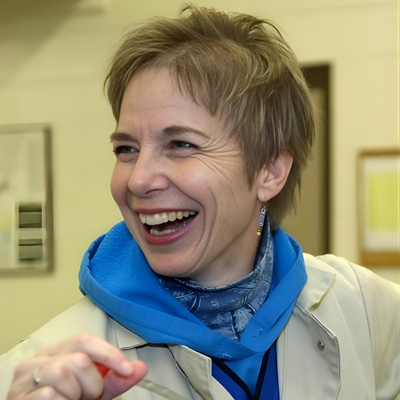
A 1977 graduate of Michigan State University College of Veterinary Medicine, she spent her academic career at the University of Florida College of Veterinary Medicine and joined Rood and Riddle Equine Hospital in Lexington, Kentucky, in 2002.
Practical application of her basic research guided her focus. She led the development of novel research and treatment techniques in mares and foals and the invention of useful equipment. Her contributions as a teacher, administrator, and mentor defied quantification.
Her love of animals was evident from an early age. She rode horses as a child and developed a lifelong love of riding and training horses.
She became a veterinarian at 24 years of age after two years of undergraduate work and three years of veterinary school. Her first job occurred by happenstance. On her way to interview for a job in Maryland, she stopped to visit Dr. Leroy Manlove, who offered her a job on the spot in his “all creatures great and small” practice. After three years of practice, Dr. Maarten Drost, who remained a good friend for her entire life, recruited her to the University of Florida (UF) as a theriogenology resident. She found like-minded individuals in the UF theriogenology group. In this stimulating academic environment, she became a Diplomate in the American College of Theriogenologists and Assistant Professor in 1982. Ultimately, she became a Professor and Director of Equine Research in 1995.
Dr. LeBlanc frequently described the early 80’s and 90’s as “the golden age of theriogenology”. While on the faculty at UF, she received numerous awards for teaching and research, including the Carl J. Norden Distinguished Teacher in 1993. Many students, interns, and residents relate the inspiration she provided in their personal and professional lives. The list of graduate students and residents she supervised at UF reads like a list of Who’s Who in Theriogenology and includes Dr. Barry Ball, Dr. Maria Cadario, Dr. Audrey Kelleman, Dr. Sara Lyle, Dr. Peter Morresey, and Dr. Dale Paccamonti, to name just a few. Many of her students have remarked on her willingness to listen as part of her positive impact on their careers.
Her intense dedication to direct communication and hard work was a significant aspect of her character. Dr. Tom Riddle enlisted her assistance in finding a theriogenologist to develop a referral service at Rood and Riddle Equine Hospital (RREH) in Lexington. In 2002, she decided that the position was right for her and she used her experience and skills with research and teaching to construct a unique amalgam of veterinary practice and research while holding an appointment as Adjunct Professor at the University of Florida.
She never balked at working on the most challenging cases and enjoyed seeing the success of her efforts at the racetrack and in the show ring. She especially enjoyed the success of Royal Delta as she won the Breeders’ Cup Ladies Classic in 2011 and 2012.
She arrived at Rood and Riddle Equine Hospital in 2002 after the devastating outbreak of Mare Reproductive Loss Syndrome (MRLS) in 2001. She was uniquely qualified to participate in research into the cause of MRLS based on her research in uterine pathophysiology published in the Journal of American Veterinary Medical Association in 1984 and her knowledge of the uterine response to medications and pathogens. In this private practice setting, she continued to study placentitis and published an in-depth paper in Proceedings of the American Association of Equine Practitioners in 2004 with Dr. Margo Macpherson and Dr. Pete Sheerin. She worked with a team of researchers to determine the root cause of MRLS as published in Journal of the American Veterinary Medical Association in 2004 and continued to study the effect of placentitis on the fetus published in Theriogenology in 2007 with Dr. Audrey Kelleman and others.
Dr. LeBlanc received awards recognizing her meritorious work from students, practitioners, industry, academics, and research peers. She received the Lifetime Achievement Award from the Florida Association of Equine Practitioners in 2011. The Florida Thoroughbred Farm Managers industry group honored her with its Carry Back Award in 2011. Her alma mater Michigan State University granted her the Distinguished Veterinary Alumnus Award in 2007. She was named the Theriogenologist of the Year in 2000 139 Clinical Theriogenology by the American College of Theriogenologists. She received the World Equine Veterinary Association (WEVA) Lifetime Achievement Award in 2011, which exemplifies her impact on international equine veterinary knowledge. The WEVA Lifetime Achievement Award honors clinical research, basic and applied research, and teaching. She is only the second recipient of this prestigious award, the first being Dr. Peter Rossdale in the United Kingdom.
Dr. LeBlanc generously shared her knowledge and ideas in many ways and welcomed constructive debate in all forums. She traveled internationally speaking to many equine veterinarians and industry professionals about new methods for improving equine health. The list of international groups she addressed is long and prestigious. She spoke to the Society for Italian Equine Veterinarians, which awarded her honorary membership, and to several Japan Racing Association Symposiums.
Her textbook contributions have provided innovative information to many students and veterinarians. She co-authored or contributed chapters to at least twelve textbooks. Her individual mentoring of students, interns, and residents provided a major contribution to the dissemination of equine health. She served on the boards and committees of many organizations to ensure the highest quality equine research.
The Havemeyer Foundation was a major supporter of Dr. LeBlanc’s research, and she organized several of the in-depth Havemeyer Workshops including a unique comparison of uterine infection in women and mares in 2004. She served as a member of the Gluck Equine Research Veterinary Advisory Board.
She served on boards and committees for the Society for Theriogenology (SFT), the American Association of Equine Practitioners (AAEP), the International Symposium for Equine Reproduction (ISER), and the American College of Theriogenologists (ACT).
Many other professional organizations benefited from her insight and effort. Dr. LeBlanc served as president of the ACT in 1997-98 and on the Board of Directors of AAEP from 2004-07. She participated in AAEP seminars, organizing the first Focus In-depth Seminar, SFT programs as chair and presenter, and equine industry meetings to educate clients and veterinarians about advancements in equine reproduction.
She assisted in developing two recurring symposiums, first, in Kentucky as the Bluegrass Symposium, then, in California as the West Coast Equine Reproduction Symposium, to help raise funds for graduate student participation in ISER. Her contributions to these organizations provide a record of her enormous positive influence on her profession both nationally and internationally. Her impact on the field of equine reproduction through her research accomplishments is permanent.
Many of her students remarked on her femininity as she worked in a male dominated profession, wearing her elegant earrings and well-tailored clothes, presenting a smart, in so many ways, role model for young women veterinarians.
We will always remember her wonderful smile and her willingness to tackle any problem head on.